4 min read
AI Could Create Opportunity for Millions — But Only If Adoption Expands Beyond Tech
AI is creating new wealth and opportunities, but mostly for technical users. Expanding AI to small businesses and trades could change the economy.
AI Could Create Opportunity for Millions — But Only If Adoption Expands Beyond Tech
There’s a lot of discussion today about how AI will change the economy, jobs, and businesses.
Some believe AI will eliminate jobs.
Others believe it will create entirely new industries.
Both may be true.
But one area that is still underexplored is this:
AI is already creating new opportunities and wealth — but mostly for technical users and early adopters.
Who Is Benefiting from AI Today?
Right now, the people benefiting most from AI tend to be:
Software engineers
Data scientists
Product managers
Marketers
Consultants
Startup founders
Investors
These groups are close to the technology, understand how to use it, and integrate it into their workflows early.
They are using AI to:
Write code faster
Create content
Automate workflows
Analyze data
Build new products
Run leaner companies
In many cases, AI is allowing individuals to produce the output that previously required entire teams.
This is already changing productivity and wealth creation.
The Group Missing From Most AI Conversations
There is another massive group of professionals that is rarely included in AI conversations:
Plumbers
HVAC technicians
Electricians
Cleaners
Contractors
Landscapers
Facility maintenance providers
Other service business owners
These professionals run real businesses, employ people, and keep homes, buildings, and infrastructure running.
But most AI tools are not designed for how they work.
They don’t need AI to write essays or generate code.
They need help with:
Finding new customers
Pricing jobs
Scheduling work
Managing follow-ups
Ordering supplies
Marketing their services
Making business decisions
If AI adoption spreads to these groups, the impact could be enormous.
AI Could Become a Wealth Expansion Tool
If AI remains concentrated among technical users and large companies, it may concentrate wealth.
But if AI becomes accessible to:
Small business owners
Service businesses
Trades professionals
Independent contractors
Local service companies
Then AI could become a wealth expansion tool, not just a productivity tool for large companies.
Imagine millions of small service businesses that suddenly:
Find better opportunities
Price more accurately
Reduce supply costs
Automate follow-ups
Improve marketing visibility
Operate more efficiently
Small improvements across millions of businesses would have a massive economic impact.
The Two Major Risks
From a broader perspective, two major risks stand out when it comes to AI:
1. Misuse of AI
Like any powerful technology, AI can be misused.
We’ve seen this pattern before with other major technologies — energy, the internet, social media, and automation tools.
The technology itself is not inherently good or bad.
The impact depends on how people use it.
2. Under-Adoption by Everyday Workers and Small Businesses
The second risk is less discussed but just as important.
If everyday workers and small business owners do not adopt AI, the benefits may remain concentrated among large companies and technical professionals.
This would widen the gap between:
Large companies and small businesses
Technical workers and non-technical workers
Early adopters and late adopters
But if adoption spreads to small businesses and service industries, AI could level the playing field in many ways.
The Future of AI May Be in Small Businesses
Many of the largest companies in the world already have:
Software systems
Data teams
Automation tools
Marketing teams
Procurement teams
Scheduling systems
Finance systems
Small businesses often have none of these.
AI could give small businesses access to capabilities that previously only large companies had.
This could be one of the biggest economic shifts created by AI.
Why This Matters for Service Businesses
Service businesses and the trades make up a massive part of the economy.
These businesses:
Maintain buildings
Repair infrastructure
Keep facilities clean and operational
Install and maintain systems
Build and repair homes and commercial spaces
They are essential, but historically underserved by technology.
AI systems designed specifically for how these businesses operate could significantly improve:
Revenue
Margins
Efficiency
Stability
Growth
Final Thought
AI will not impact everyone the same way.
The biggest impact may not come from replacing workers.
It may come from giving millions of small business owners better tools to run their businesses.
The future of AI will not just be determined by what the technology can do.
It will be determined by who gets access to use it effectively.
Ready to get started?
Ready to run your service business with AI?
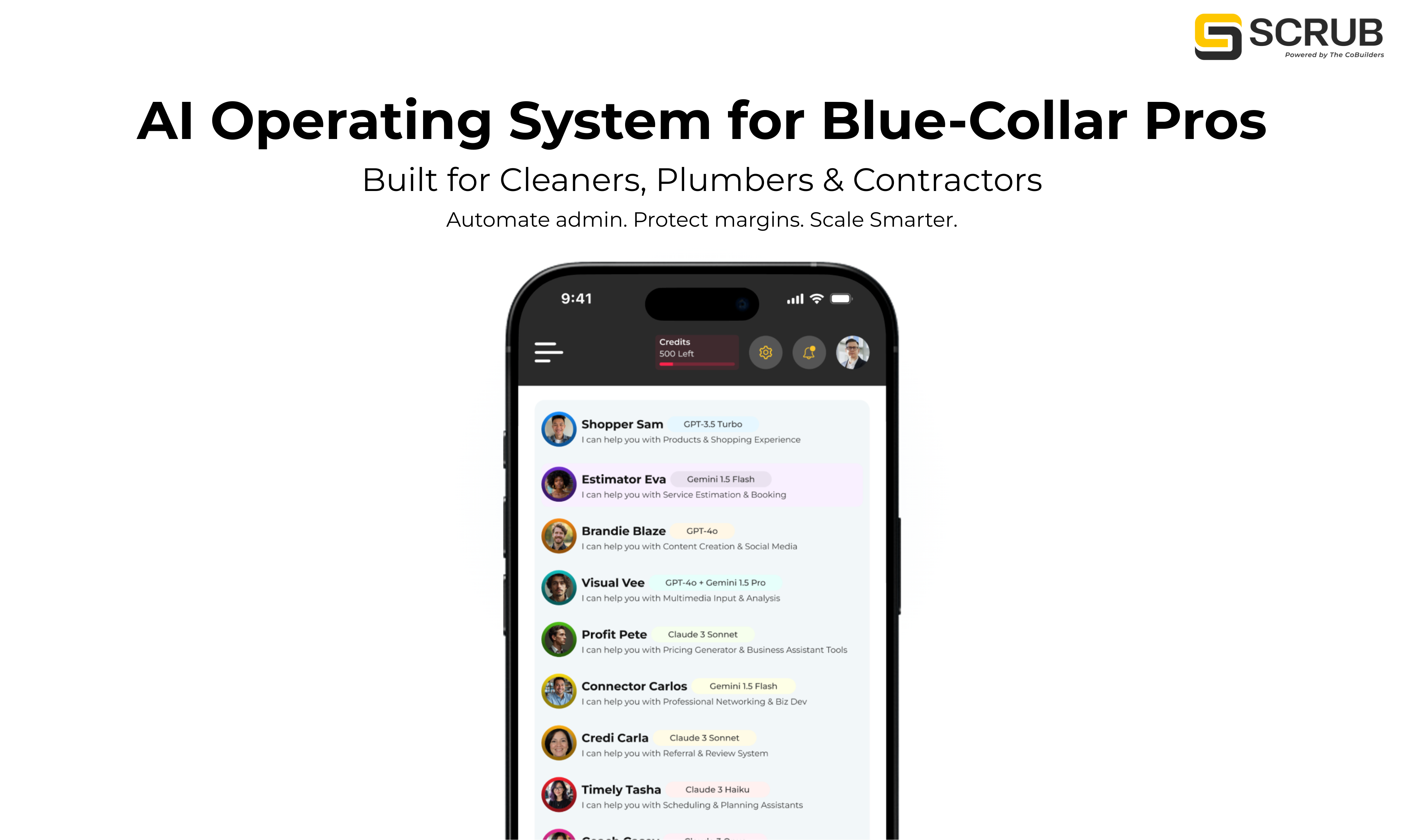
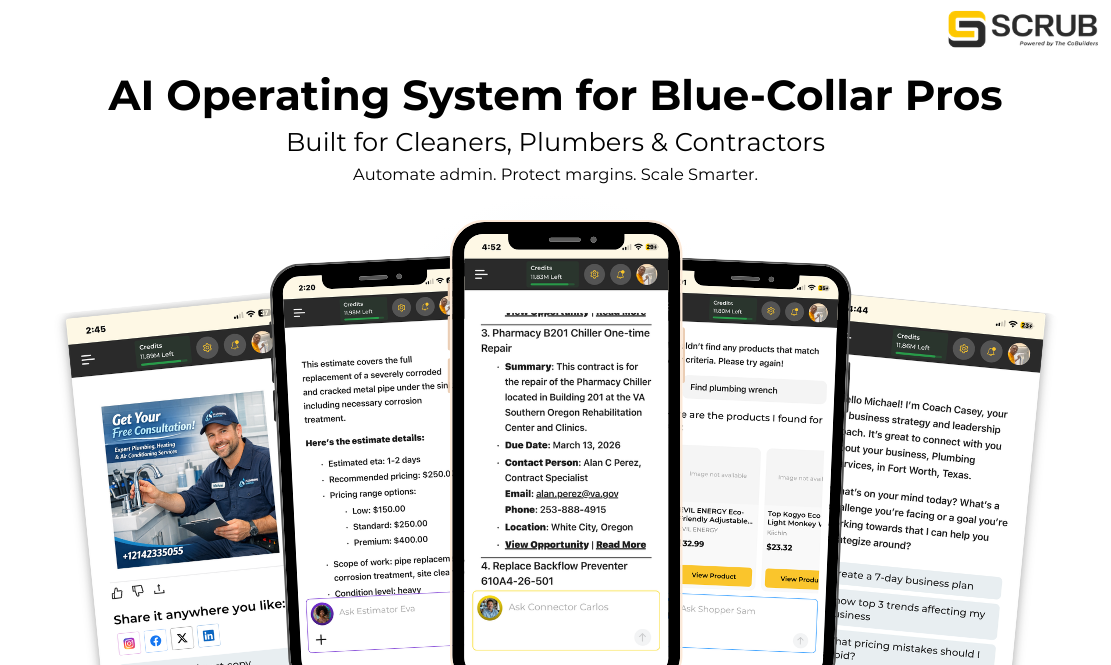
SCRUBgpt helps blue-collar professionals find commercial leads, automate operations, improve marketing visibility, and run their businesses more efficiently.
Try SCRUBgpt free for 7 days and see how AI can support your business.


Featured Posts
1 min read
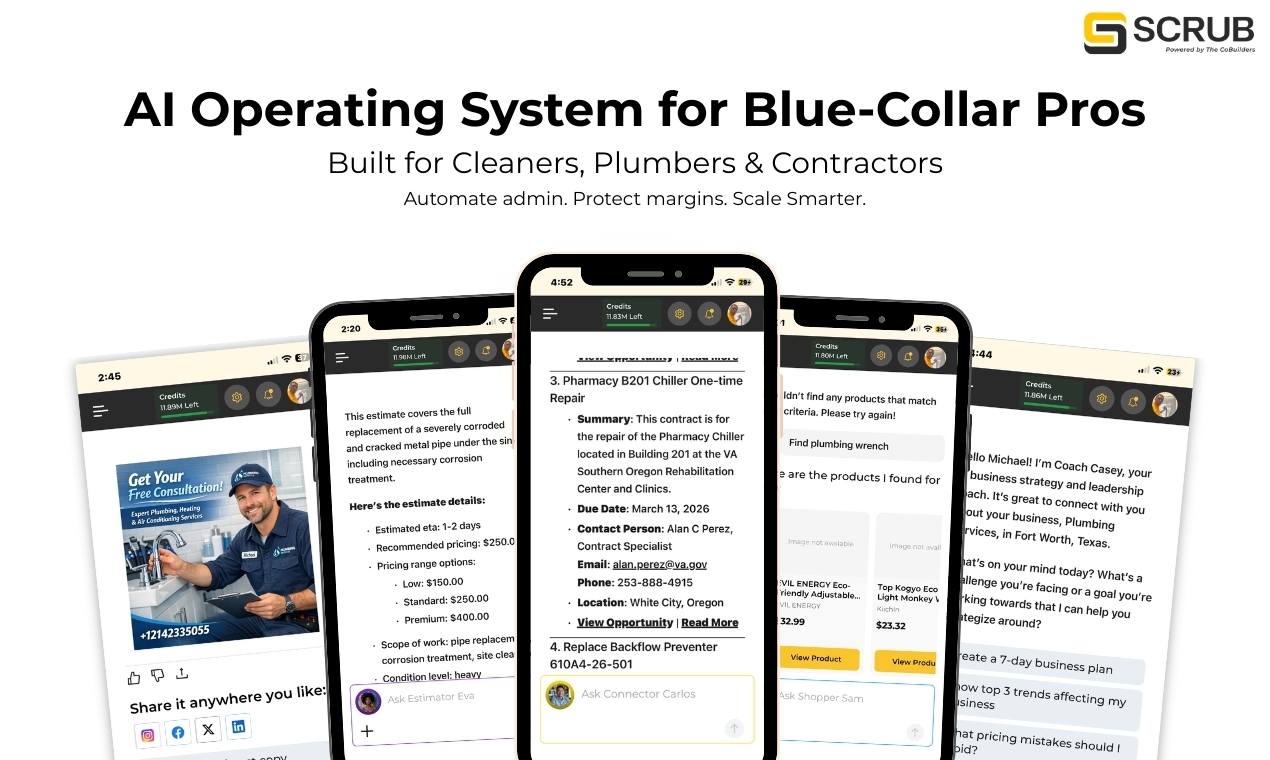
SCRUBgpt Is Not Another Chat Tool
1 min read
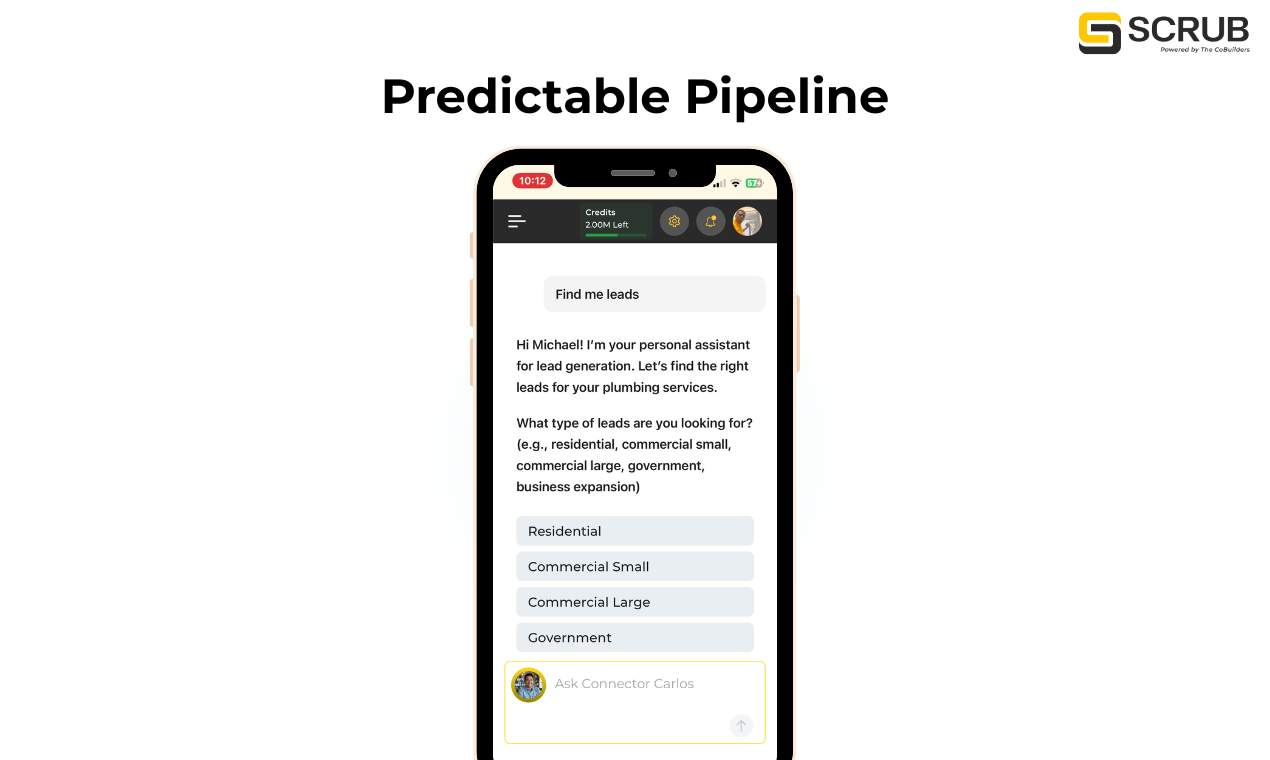
Your Service Business Doesn’t Have a Revenue Problem
1 min read
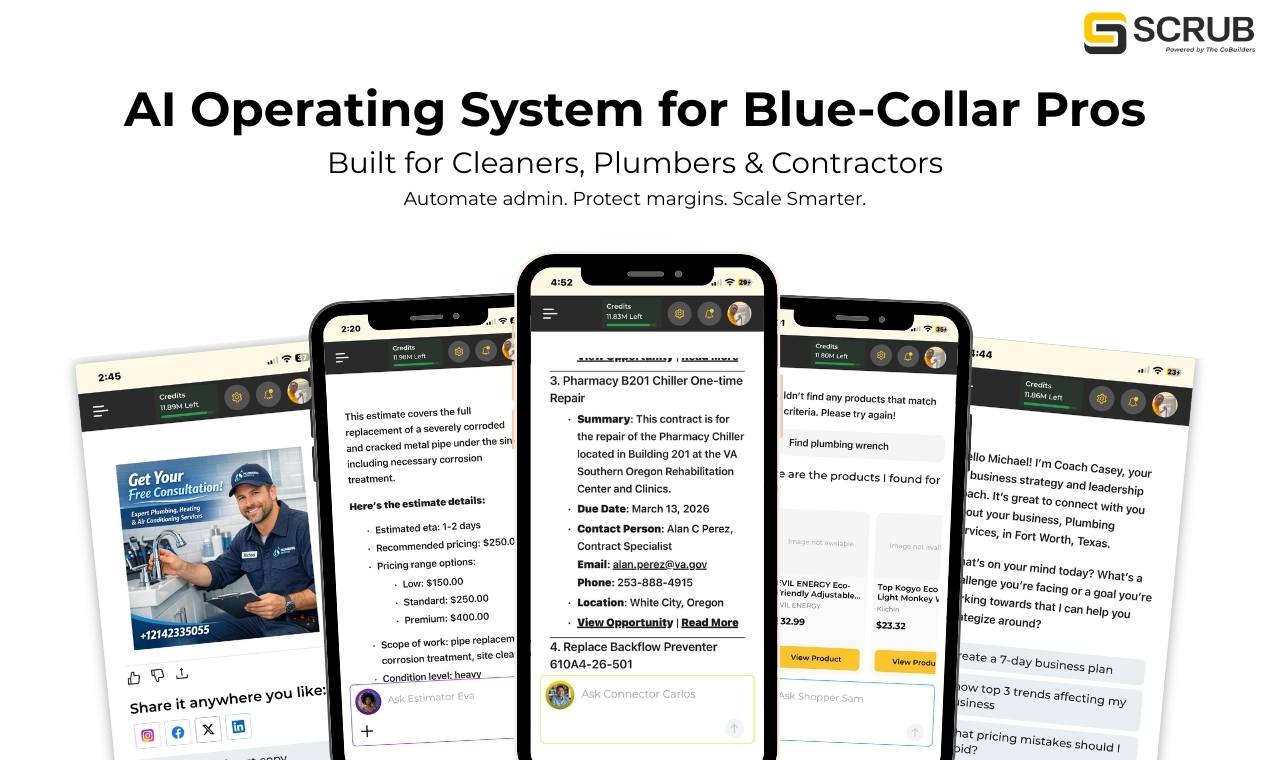
SCRUBgpt: AI for Cleaning & Service Businesses
Related Blog
1 min read
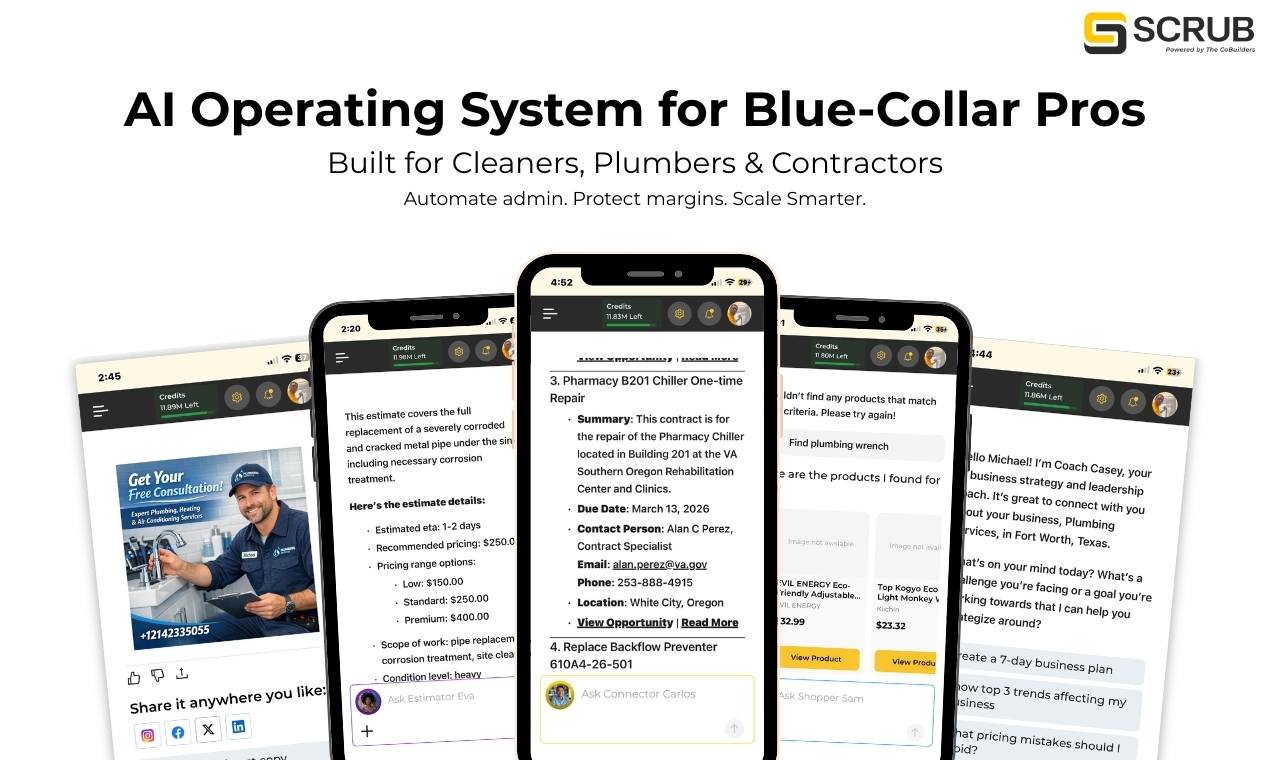
The Future of AI Is Industry Operating Systems
AI is moving from chat tools to industry operating systems. Learn how AI platforms like SCRUBgpt help service businesses operate and grow.
1 min read
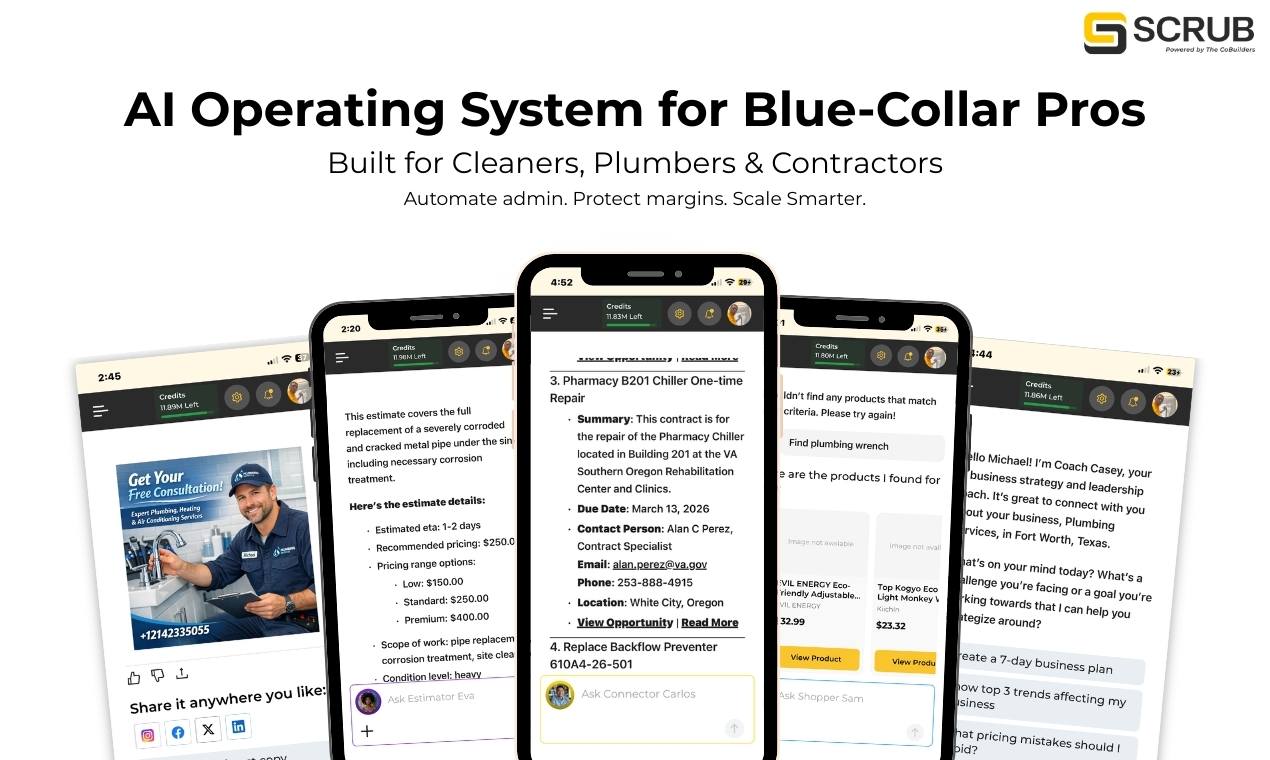
The Hidden Margin Killer in Service Businesses: Supply Costs
Shopper Sam inside SCRUBgpt helps cleaners, plumbers, and contractors find better supply pricing and improve margins through smarter purchasing.
1 min read
SCRUBgpt Is Not Another Chat Tool
SCRUBgpt helps plumbers, cleaners, HVAC techs, and contractors increase revenue through structured workflows, not just fast AI responses.
1 min read
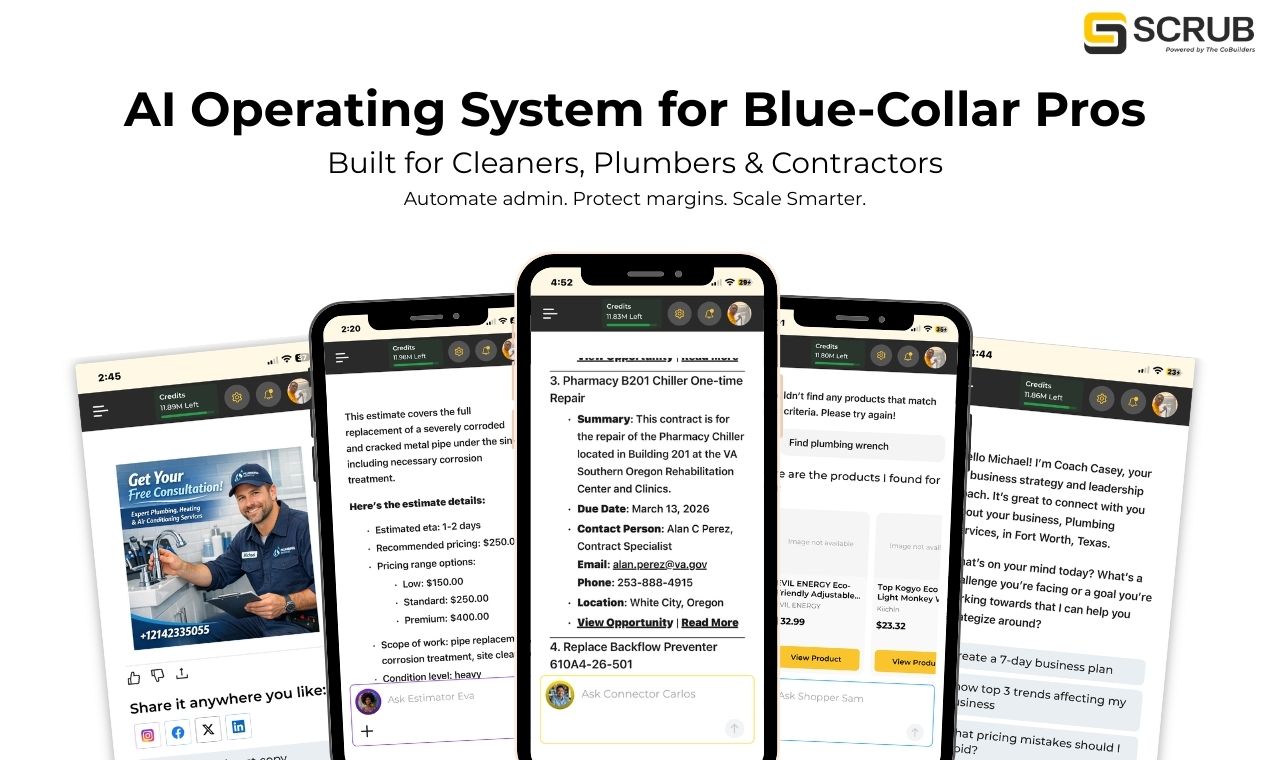
Great Service Isn’t Enough If Customers Can’t Find You
Brandie Blaze inside SCRUBgpt helps cleaners, plumbers, electricians, and contractors create marketing content and stay visible online.
1 min read
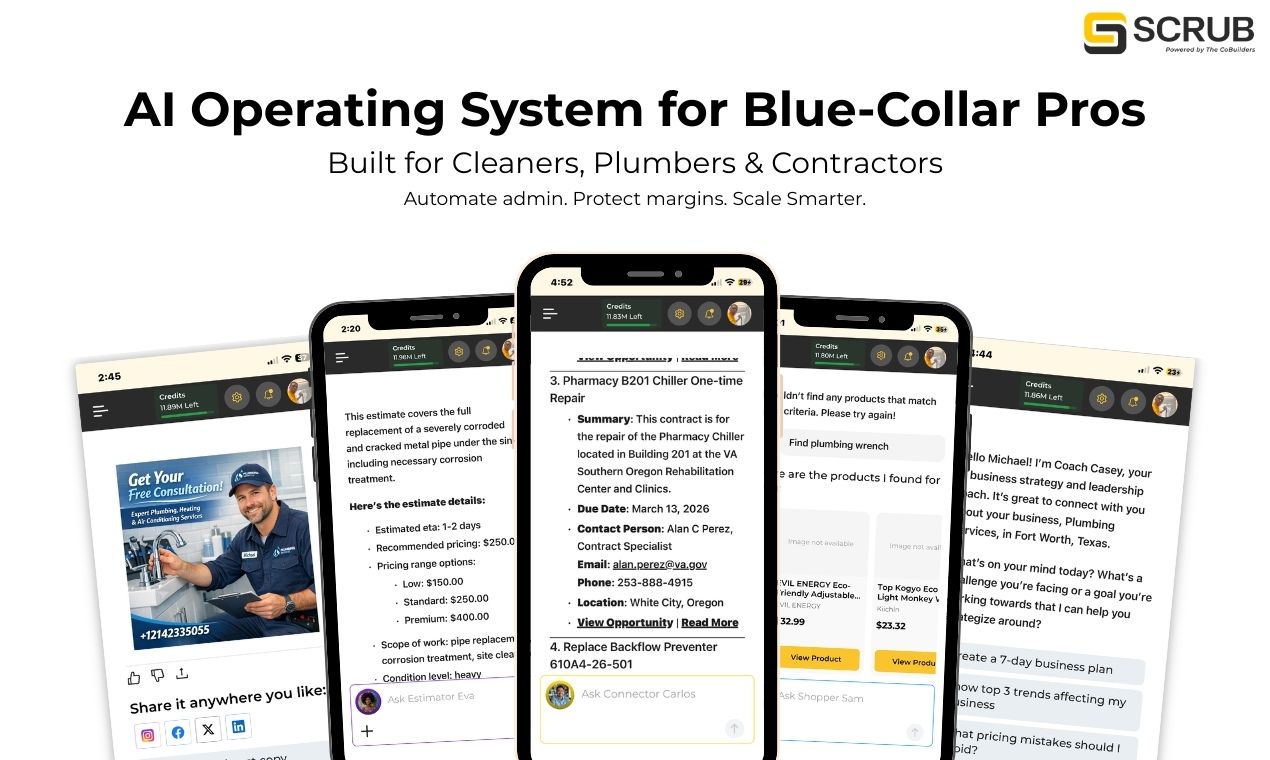
Why Supply Decisions Quietly Hurt Service Business Profits
Learn how Shopper Sam inside SCRUBgpt helps cleaners, plumbers, electricians, and contractors manage supplies and purchasing more efficiently.
1 min read
The Rise of Vertical AI Platforms
AI agents are transforming software into digital labor. Learn why vertical AI platforms like SCRUBgpt represent the next wave of industry infrastructure.

Connect With Us


SCRUBgpt
Legal & Privacy
© 2015-2026 The CoBuilders LLC. SCRUBgpt is a product of The CoBuilders. All rights reserved.